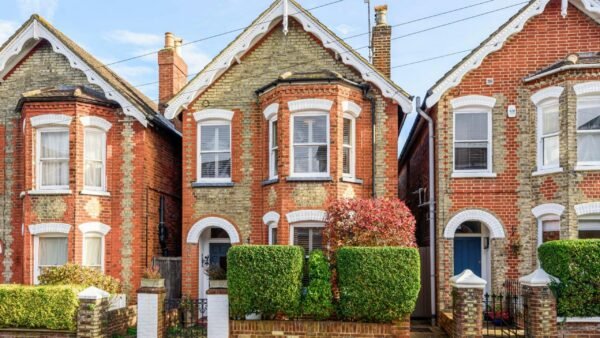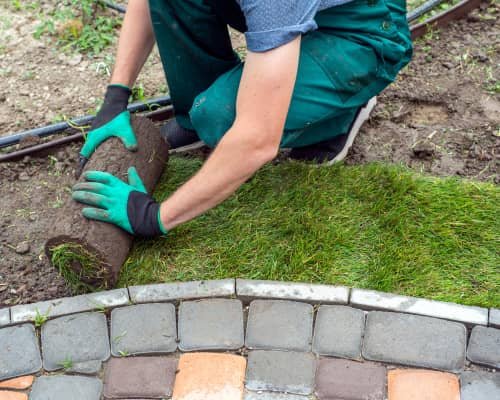


There was a time when landscaping was a nice-to-have. Something you sorted after the sale. A vague line in the particulars that said “well-maintained garden” and left everyone to imagine the rest.
That has changed.
Buyers at the premium end of the market are looking harder at what sits outside the front door. And agents who’ve been doing valuations long enough to notice a shift are noticing one now. The exterior isn’t the afterthought. In a lot of cases, it’s doing serious work on the asking price.
What agents see at valuation
Ask any agent who operates in the £500,000-plus bracket and most will tell you the same thing. Properties that present well outside move faster and attract stronger early offers.
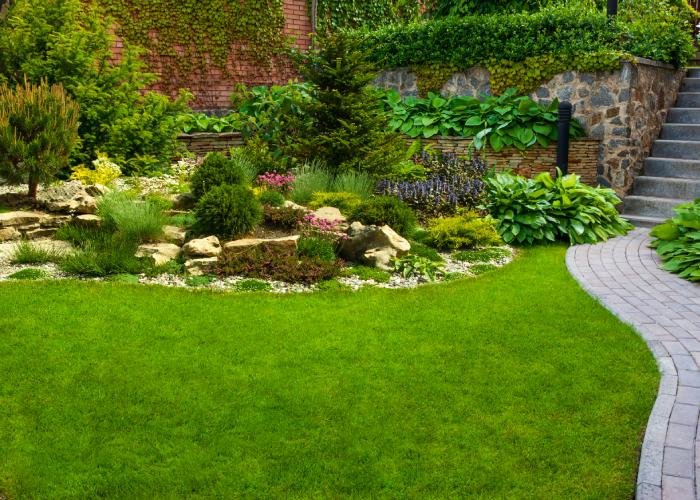
It’s not about flowers. It’s about the overall impression a buyer gets in the first ten seconds. The driveway. The boundary treatments. The condition of the paving and planting. Whether the space looks considered or cobbled together.
A well-presented exterior can influence a buyer’s first impression, but there is no fixed percentage uplift that applies to every property. Local demand, condition and comparable sales all affect the eventual offer.
Agents who work with developers get this even more sharply. A show home plot with a properly finished exterior sells the others. The spec matters. How the space feels when you pull up matters. And that feeling is almost entirely created by exterior design.
The specifics that move buyers
It’s worth being precise about what “exterior design” actually means in this context, because it’s easy to conflate it with gardening.
Gardening is maintenance. Exterior design is the deliberate arrangement of hard and soft elements to create a coherent, well-proportioned space.
That means driveway material and layout. Boundary treatments, whether wall, fence, or hedge, and how they interact with neighbouring properties. The transition from driveway to entrance. The quality of the path and step detail. Whether there’s a planted border that gives softness without looking chaotic.
In rear gardens it means the relationship between the house and the garden. The size and position of the patio or terrace. Whether there’s a clear sequence of spaces, something to draw the eye, a sense that the garden extends the house rather than just sitting beside it.
None of this happens by accident. It requires planning, which is why the gap between a well-designed garden and an average one is so visible. Buyers feel it. They can’t always name what’s different. But they know when a space has been thought about.
What the Scottish market looks like
Scotland has its own set of conditions that make exterior design more relevant, not less.
The climate is wetter and the outdoor season is shorter than in the south of England. That pushes the investment calculus toward materials that perform in rain and frost, toward covered or sheltered zones that extend usability, and toward hard landscaping that holds up without constant maintenance.
Premium neighbourhoods in Glasgow, areas like Bearsden, Milngavie, and Newton Mearns, tend to feature substantial plots. There’s space to do something significant. And in the market for detached homes in those areas, buyers have choices. When two properties are similarly priced, the one with a finished, coherent exterior presentation stands out in the listing and in person.
MacColl & Stokes Landscaping in Glasgow work on exactly these kinds of properties. Their projects typically combine hard landscaping, paving, driveways, and planted elements into a cohesive design rather than treating each element separately. It’s that joined-up approach that produces the kind of result buyers notice.
The valuation effect is real but easy to miss
Here’s where it gets interesting for property professionals specifically.
The challenge with exterior design is that its effect on value is diffuse. It doesn’t show up as a line item the way a new kitchen does. A buyer doesn’t say “I’m offering more because the driveway is well-laid.” They say they love the house. Or they put in a fast offer at asking price without negotiating.
The connection is there. It’s just harder to isolate.
Exterior condition can form part of a property’s overall appeal, but its effect on the sale price is difficult to isolate. Ask a local valuer to assess the property against comparable sales.
For sellers, exterior investment before listing is worth weighing against the likely sale price and local buyer expectations. Get itemised quotes and ask a local agent which improvements are likely to matter. Do not assume that major landscaping costs will be recovered in the sale.
The timing matters too. Finishing exterior work before professional photography is taken produces better listings. Portals are visual first. A well-presented exterior is the thumbnail image. That drives click-through, and click-through drives viewings.
What good exterior design investment looks like
Not all exterior work produces equal returns. Some of it is neutral. Some actively adds value. The difference is usually whether the work is integrated or piecemeal.
A new driveway that doesn’t connect well to the boundary treatment or the planting reads as a patch job. A garden that has a beautiful patio but an unloved lawn and broken fencing sends a mixed message. Buyers see it all at once.
The projects that tend to perform best share a few characteristics.
They start from the kerb. What does the property look like from the road, or from the pavement outside? That view sets the frame for everything that follows.
They treat hard and soft landscaping as connected. Paving, planting, and boundary treatments designed together rather than sourced separately.
They choose materials appropriate for the climate and the property’s age. Resin bound on a Victorian semi can look incongruous. Natural stone sets on a contemporary new build can look exactly right. The material choice signals something about design literacy.
And they’re finished properly. Edge details. Transitions between surfaces. The quality of pointing on stone or brick. These are the things buyers touch and look at closely during viewings. They tell you whether the work was done by someone who cares about the result or someone who just wanted it done.
The gap between the market and seller awareness
Most sellers understand that interiors sell houses. Kitchens, bathrooms, and presentation have been the subject of property TV programmes for two decades. The idea that you prepare the inside is established.
The exterior is less understood. Sellers will spend £5,000 on a cosmetic kitchen refresh before listing and leave a cracked driveway and an unloved garden completely untouched. The driveway is often the first thing a buyer sees. The garden is often the deciding factor for families with children.
That gap between what sellers focus on and what buyers actually respond to is where agents can add real value. Advising clients to invest in exterior presentation before listing, and being specific about what that means, is the kind of guidance that leads to faster sales and better outcomes for everyone involved.
It also means knowing which contractors operate at the right level in your area. Exterior work on a premium property should match the standard of the property. The design, the materials, and the finish all carry information about quality. Cutting corners there costs more than the saving is worth.
The garden is part of the asking price. It was probably always true. It’s just more visible now.
Frequently Asked Questions
A professionally landscaped garden can increase a property’s appeal and potentially its market value, particularly in premium residential areas. Features such as well-designed patios, quality paving, attractive planting and defined outdoor living spaces can make a home more desirable to buyers. However, the financial return depends on the property’s location, buyer demand and the quality of the work. A local estate agent can advise whether landscaping improvements are likely to influence the asking price.
Garden improvements that enhance appearance, functionality and ease of maintenance are often the most appealing to buyers. These include attractive patios, well-maintained lawns, quality fencing, improved drainage, outdoor seating areas and professionally designed planting. For higher-value properties, a cohesive landscaping scheme that connects the garden with the house can be particularly effective. The best improvements are those that complement the property’s style and meet local buyer expectations.
Landscaping before selling can be worthwhile if the existing garden is poorly maintained, unattractive or difficult to use. Simple improvements such as repairing paving, trimming overgrown plants, refreshing borders and cleaning patios may improve first impressions without significant expense. Larger landscaping projects should be considered carefully, as sellers may not recover the full investment. Consulting a local estate agent before committing to major work can help identify which improvements are most likely to appeal to prospective buyers.
Kerb appeal plays an important role in attracting potential buyers because the exterior creates the first impression of a property. A well-maintained driveway, attractive entrance, tidy front garden and quality boundary treatments can make a home stand out in property listings and during viewings. Strong kerb appeal is particularly relevant in competitive housing markets, where buyers may compare several similarly priced properties before deciding which to view.
Garden landscaping in Scotland should prioritise durability, drainage and year-round usability. Materials such as natural stone, weather-resistant paving and suitable hard landscaping can help outdoor spaces withstand wet conditions and winter frost. Sheltered seating areas, low-maintenance planting and effective drainage are also valuable considerations. In areas such as Bearsden, Milngavie and Newton Mearns, professionally designed gardens that combine practical outdoor living with attractive landscaping can help premium properties stand out.