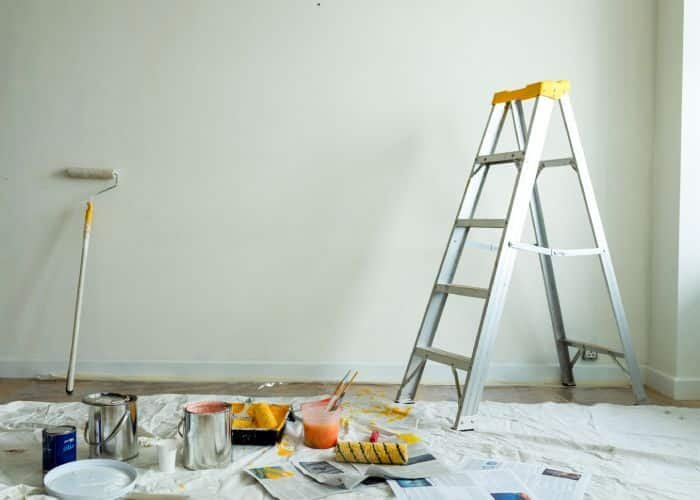


There are lots of health and safety rules surrounding the use of ladders, but strictly speaking, these only come into play if you’re using a ladder in the workplace. Obviously, if you’re just using a ladder to do a bit of DIY at home, you don’t have to carry out a full risk assessment, you don’t have to complete a ladder competence training course, and there’ll be no HSE investigation if you get careless and fall off.
This is not to say that using a ladder at home is any less dangerous than using one at work. The risks are much the same, in fact, and plenty of people have injured themselves – in many cases, quite seriously injured themselves – by falling off a ladder in the course of carrying out home improvements or repairs. The difference is that, in your own home, it’s entirely on you to keep the situation safe (whereas in the workplace, that responsibility is shared with your employer).
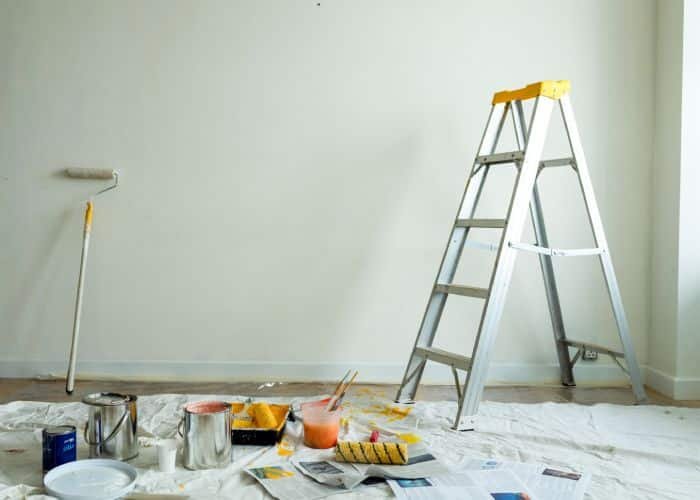
Falling off a ladder can cause injuries even if:
- The ladder isn’t particularly tall
- You’re not that far off the ground
- You land on a relatively soft surface, like a lawn or a carpeted floor
A long fall that ends in a hard landing is certainly more likely to inflict serious injuries than a short drop onto your living room carpet, but seemingly minor falls can still be nasty enough to necessitate a trip to A&E – especially if you fall onto something or otherwise land awkwardly.
So don’t be in too much of a rush to shimmy up that step ladder and get started on whatever odd jobs you’ve got planned for this weekend. Before you even set up your ladder, it’s worth taking a few minutes to familiarise yourself with some key best practices and safe working procedures.
Here are some handy DIY ladder safety tips for starters:
- Make sure you’ve chosen the right type of ladder. A set of folding steps might be fine for changing light bulbs or painting the kitchen cupboards, but bigger jobs will probably require something a bit more heavy-duty. For example, if you need to clear your gutters or paint your house’s external walls, it might be worth investing in an extension ladder.
- Inspect the ladder before you start. Prior to using any type of ladder, carry out a quick visual inspection to make sure there are no obvious signs of damage. If you spot anything that might compromise the ladder’s stability – e.g. loose rungs, bent side rails, a missing foot – then get yourself a new ladder instead of risking your neck.
- Look for possible hazards. No, you don’t need to conduct a formal risk assessment, but do take a moment to examine the space in which you’re going to be using the ladder and think about what could go wrong. For example, is there a door nearby that could swing open and knock you over? If you’re working outdoors, is there a chance of rain falling on you and making the ladder slippery?
- Stand the ladder on a flat, solid surface. Each of the ladder’s feet should be firmly on the ground, and neither the ladder nor the floor should be in danger of moving around as you climb.
- Take it slow and steady. Avoid rushing when you’re climbing up or down a ladder. Face forward, take one step at a time, and keep both hands on the ladder as you ascend or descend.
- Don’t stand at the very top of the ladder. The topmost rungs of a ladder are not for standing on – you can hold onto them with your hands in order to steady yourself, but if the upper part of your body is above and beyond the top of the ladder then you need to go down a step or two.
- Maintain three points of contact. While you’re working, you should try to keep both feet and one hand on the ladder at all times. If that’s not possible (e.g. because you’re doing something that requires both hands), use your body to create the third contact point.
- Don’t over-reach or lean too far to one side. To keep your ladder from becoming unbalanced, follow the ‘belt buckle’ rule and keep your belt buckle (or if you don’t wear a belt, your belly button) in between the ladder’s two side rails. If this leaves you unable to reach the spot you’re aiming for, get off the ladder and reposition it.
- Try not to stay on the ladder for too long. Ladders are best used for light, quick jobs. If the task at hand would require you to stay on a ladder for more than 30 minutes at a time, consider using a different type of height access equipment – such as a work platform that gives you more room to move around while you’re elevated.
- Don’t take unnecessary risks! Use your common sense, and don’t fall into the trap of thinking ‘well, it’ll probably be fine’. If you need to use a ladder outdoors and it’s due to start raining any minute, postpone your DIY plans until the forecast improves. If you’re not sufficiently fit and able to get up and down a ladder, don’t attempt to do so. And if you see something that has the potential to become a hazard, take care of it before you make a start!