


Art plays an intrinsic role in shaping a home’s identity. Thoughtfully curated pieces can elevate a home’s DNA by complementing its architecture, influencing its mood, and aligning seamlessly with the owner’s lifestyle. We spoke with Arushi Kapoor, internationally recognized Art Advisor and Founder of The Agency Art House, to dive deeper into her strategy of collecting and displaying art—not only as decoration but as a powerful extension of design and expression of emotion.
As an art advisor, what has your own experience been like curating art for your personal spaces? And how has it shaped the way you guide clients?
The works I collect and choose for my own home are pieces I want to live with, grow with, and sometimes even be challenged by. That philosophy translates directly into how I guide clients. I encourage them to move beyond trends and think about longevity—what will still resonate five, ten years from now. Collecting, at its best, is an evolution of identity.

For a homeowner looking to start curating with intention, what’s the first step you’d recommend?
The first step is clarity, understanding how you want your space to feel. Knowing your budget and limits is important—not what you think you should buy, but what you’re naturally drawn to. I often tell clients: start with one strong piece rather than several safe ones. A single, confident decision sets the tone for everything that follows. From there, a collection builds organically. Building a collection isn’t a sprint, it’s a relay.
How does a home’s architecture inform the way you approach art curation? What do you look for first?
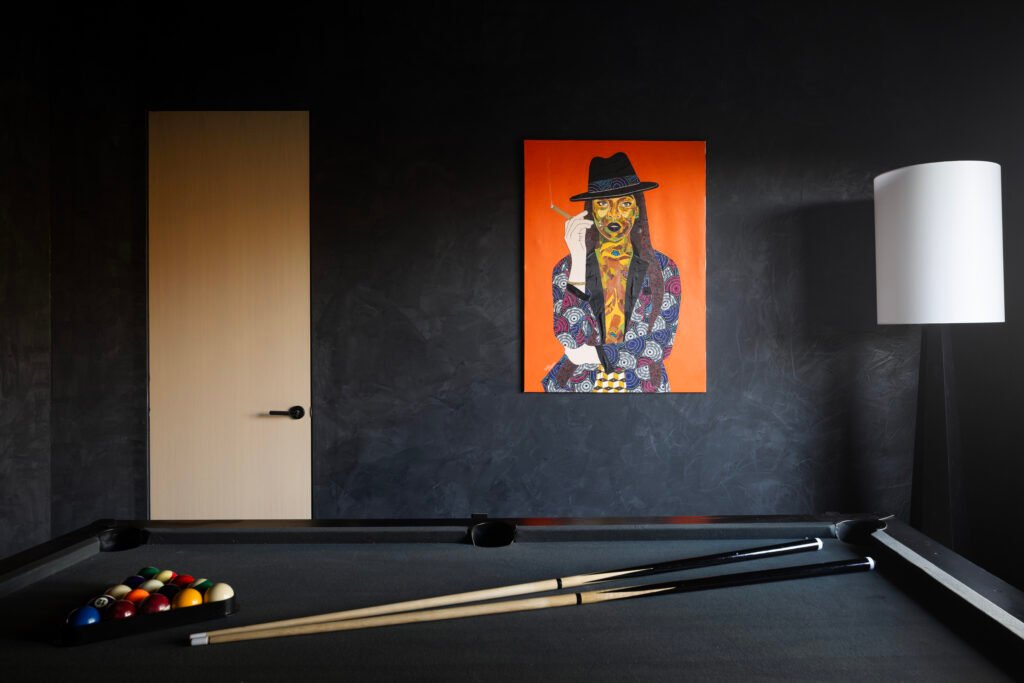
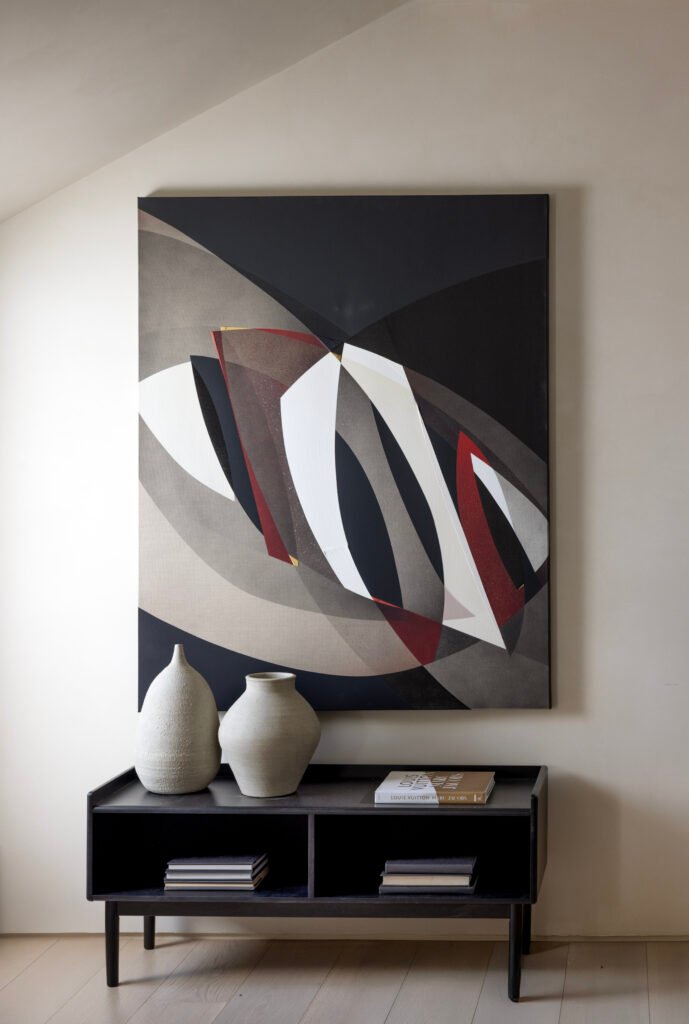
Architecture is always the starting point: scale, proportion, light, and materiality. In a minimal, architectural space, a bold or textural work can introduce depth. In a more layered, classical environment, restraint can be far more powerful. A home already has a rhythm, an idea of what it should be, and art should enhance that, not compete with it. It’s about balance, knowing when art should lead and when it should quietly support.
I’ve seen a single Picasso at the entrance reframe an entire property, to the point where everything else becomes secondary. That’s the difference between decorating and curating. One is additive. The other is decisive. Placement is everything.
What questions do you ask clients to understand what kind of art will truly resonate in their home and with their lifestyle?
I ask questions that go beyond art—how they live, how they entertain, what inspires them, even what they grew up around. Are they looking for calm or energy? Do they want pieces that spark conversation or create stillness? The goal is to understand not just their taste, but their rhythm of life. The best collections feel inevitable, not imposed. I’m trying to understand their appetite for risk, for emotion, for presence. The best collections reveal something about the person that furniture never will.

by The Agency Art House


How can a single well-placed piece complement a home’s architectural details in a way that feels intentional rather than decorative?
One serious work, placed with conviction, can do more than twenty forgettable ones. When a piece is scaled and positioned correctly, it doesn’t just sit on the wall, it defines the room. I’ve seen a single Picasso at the entrance reframe an entire property, to the point where everything else becomes secondary. That’s the difference between decorating and curating. One is additive. The other is decisive. Placement is everything.
I often tell clients: start with one strong piece rather than several safe ones. A single, confident decision sets the tone for everything that follows. From there, a collection builds organically.
In what ways does art influence the mood and energy of a space beyond what furniture or finishes alone can achieve?
Art, with colors and dimensions, brings an emotional dimension that nothing else can. Furniture defines function, but art defines feeling. It can introduce tension, serenity, curiosity, sometimes all at once. A space without art can feel complete, but rarely alive. The right artwork disrupts that. Art is what gives a home its pulse. It creates a point of gravity. It can make a space feel quieter or more electric, but either way, it makes you feel something. Without that, you’re just in a well-furnished room.
Any other ways in which you’ve seen art curation enhance a client’s home purchase?
Art doesn’t just enhance a home, it can define its value. I’ve seen properties that were architecturally beautiful but forgettable become completely iconic once the right works were placed. It changes how buyers perceive scale, importance, even price justification. At a certain level, people aren’t just buying square footage; they’re buying identity. And art is often the fastest way to establish that.
—
To learn more about Arushi Kapoor and our art curation and advisory services,
visit The Agency Art House.